Why a 100-piece MOQ is the smartest way to start
How to use low-MOQ production samples to validate a design before you commit volume — and why the higher per-unit cost almost always pays for itself.
Most factories quote 500-1,000 piece minimums on custom wooden boxes. We deliberately offer a 100-piece sample run because it solves a problem most buyers do not realize they have until it bites them.
The problem is that a single hand-built sample — what most factories call a "free sample" — is misleading. It is made by your most experienced craftsperson, slowly, with no time pressure, with the best materials in the shop. It will always look better than what comes off the production line. By the time you see your first production run, you have already committed to tooling, materials and full lead time.
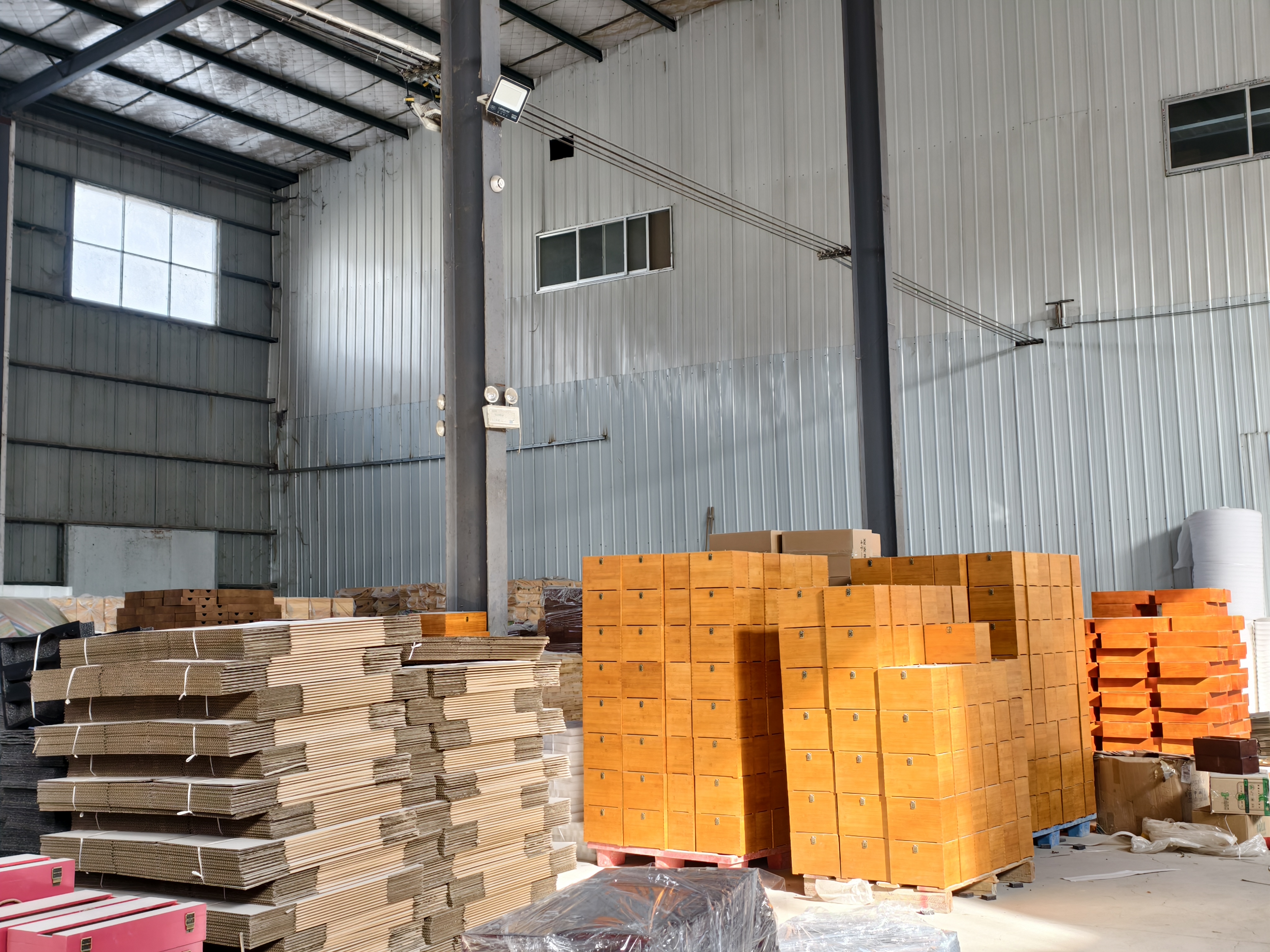
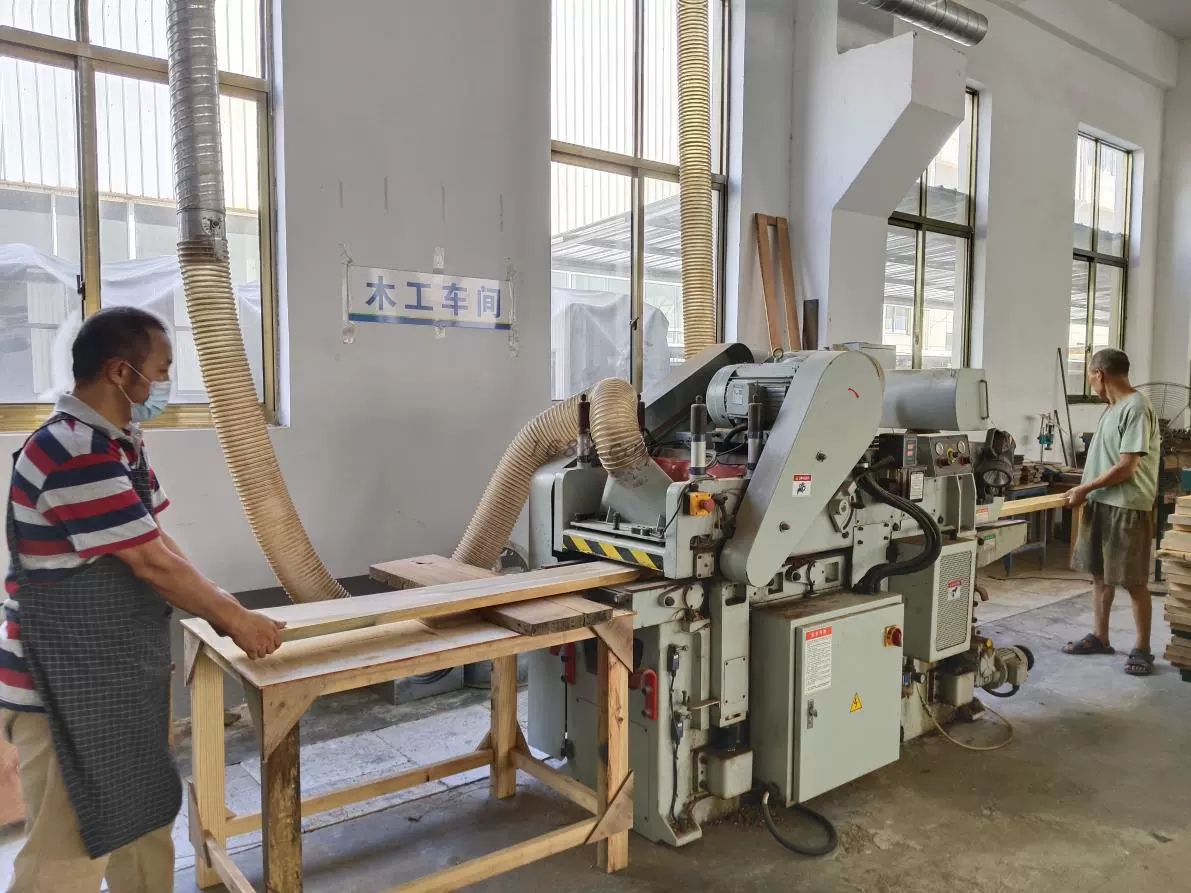
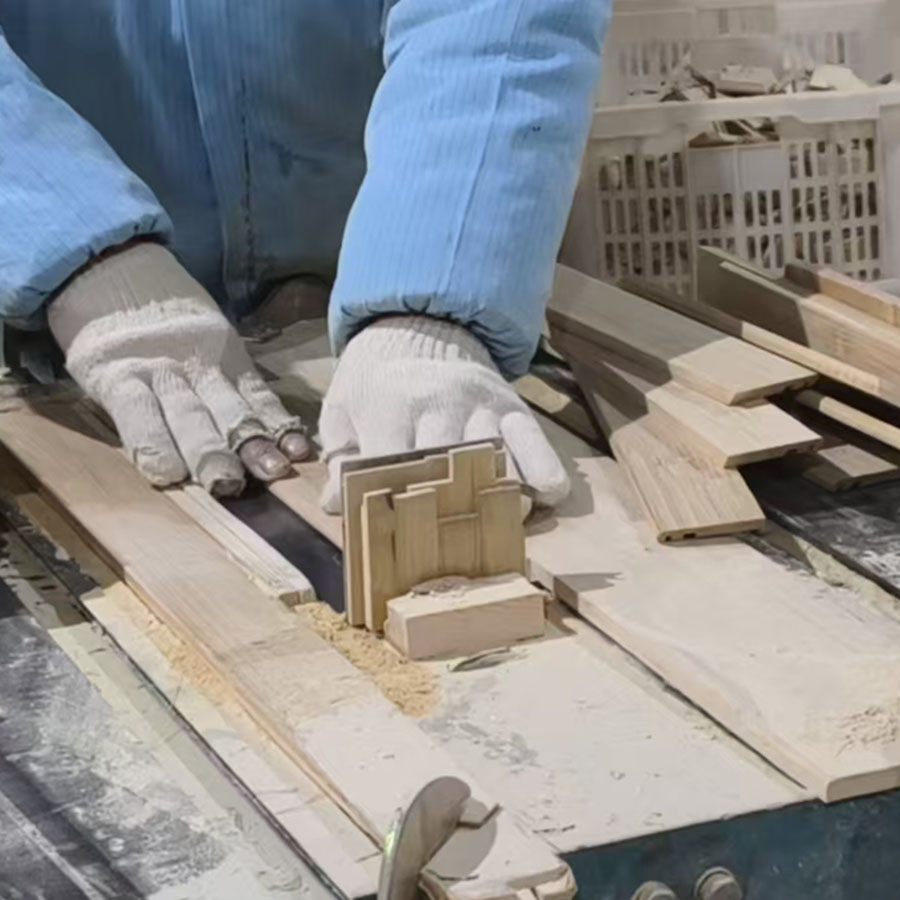
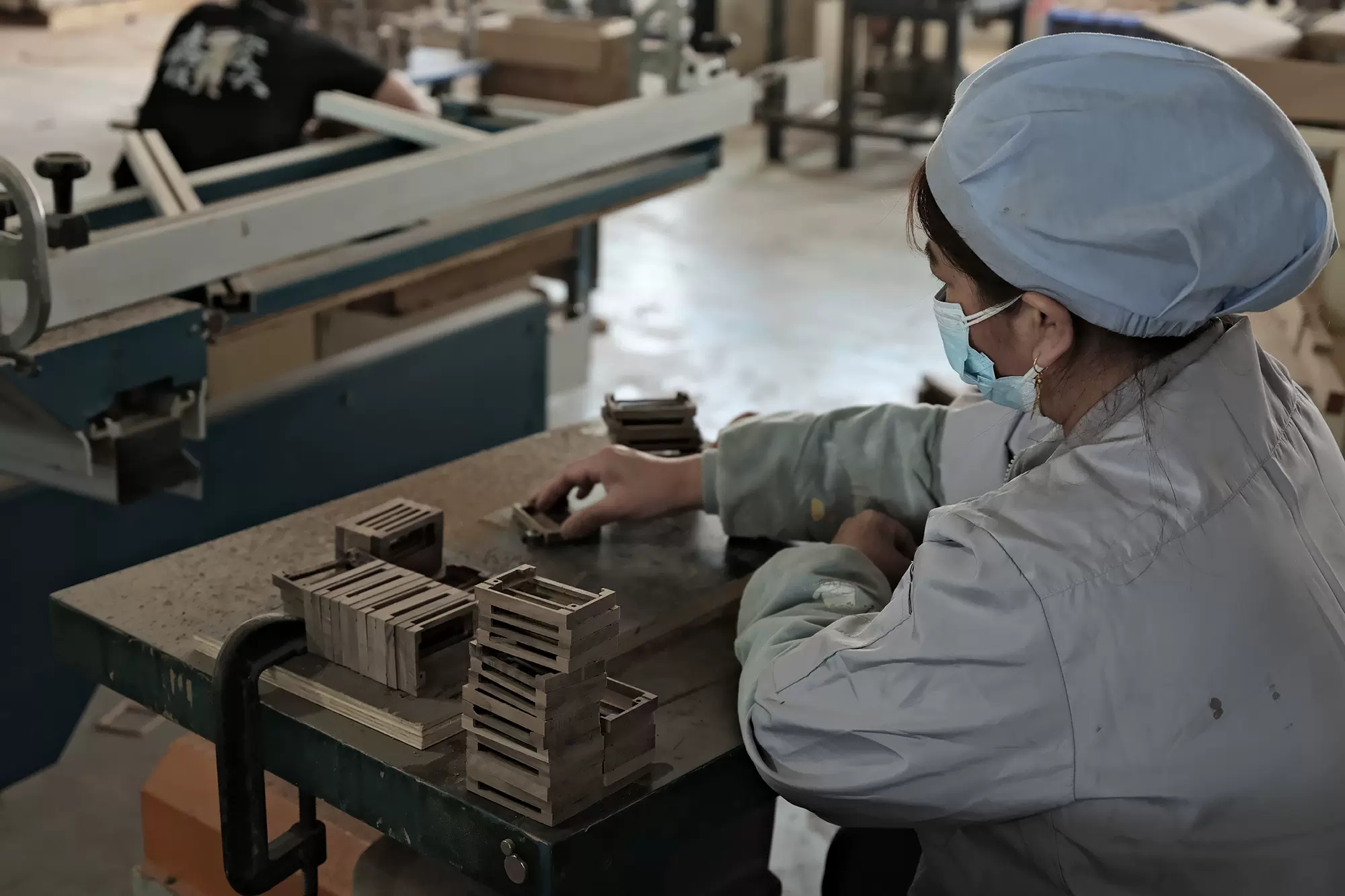
A 100-piece sample run runs through the same tooling, same fixtures, same assemblers and same finishing line as a 5,000-piece order — just with 100 pieces instead of 5,000. You see what the boxes will actually look like at scale. We can adjust fixtures, finishes and packing before you commit to volume. Both sides learn what the real product looks like, not what the prototype looks like.
A real example: $14,000 saved on a watch box order
A new buyer last year — small US-based watch brand, first wooden box order — sent us a CAD file for a 4-watch presentation case in walnut. We quoted, signed an NNN agreement, and made a single hand-built sample. Buyer approved the sample and placed an order for 5,000 units.
We strongly recommended a 100-piece production trial first. Buyer agreed, somewhat reluctantly because of the timeline pressure.
The 100-piece trial revealed three issues that the single hand-built sample did not show:
- The hinges seated 0.6 mm proud on the production-cut mortises — a fixture issue we fixed by re-cutting the jig
- The microfiber pillows were 2 mm too tall, causing the lid to compress them at close — fixed with a thinner foam core
- The outer carton design did not protect the box corners adequately during stack testing — fixed with thicker corner inserts
If we had gone straight to the 5,000-piece order, those three issues would have shipped. Buyer would have caught them at receiving inspection (or worse, customers would have caught them as one-star reviews). Reworking 5,000 boxes would have cost an estimated $14,000 in labor and freight.
The 100-piece trial cost the buyer about $1,800 more per unit than scaling directly. Net savings: roughly $12,200, plus a much better final product, plus a six-week delay avoided.
What a 100-piece run actually tests
1. Production fixture accuracy
Single hand-built samples use temporary jigs and an experienced assembler doing one-off work. Production runs use permanent fixtures with operators doing the same task hundreds of times. Fixture accuracy at scale is the single biggest source of "the production run looks worse than the sample" problems. A 100-piece run exposes this.
2. Material consistency at scale
A single sample uses the best board in the shop. A production run uses every board that meets spec. Color variation, grain variation, knot patterns — these all average out across 100 boxes in a way that cannot be tested with a single sample.
3. Finish behavior across batches
Finish coats are mixed in batches. The exact tone and gloss can vary subtly between batches. A 100-piece run uses 1-2 finish batches, exposing whether your design tolerates that natural variation.
4. Packaging and freight performance
Single samples ship in their own protective packaging. Production runs ship in master cartons stacked on pallets — they are exposed to handling stresses that single samples never see. A 100-piece trial shipment goes through real customs, real freight, real warehouse intake. Buyers regularly find packaging issues at this stage that they would never have caught with a single sample.
When to skip the 100-piece trial
Sample runs cost more per unit and add 2-3 weeks to the timeline. They are not always the right call. Specifically:
- Re-orders of an existing approved design (no design changes since last production)
- Pure ODM orders with no customization (we have made the same box thousands of times)
- Volumes under 300 pieces (the trial run becomes the full order)
- Time-critical orders where market timing matters more than risk reduction (rare, but it happens)
For everything else — first-time buyers, custom OEM projects, ODM-plus orders with significant modifications, anything where the design has not been produced at scale before — we strongly recommend the trial run.
Cost framing — the real math
Per-unit cost on a 100-piece run is typically 30-60% higher than on a 1,000-piece run. The setup labor is the same; it is just spread across fewer units. So the absolute cost difference depends on the box price.
For a $5 box, the 100-piece trial costs about $700-900 versus a 1,000-piece run of the same box (which would be ~$5,000). For a $25 box, the trial costs $3,000-3,800 versus a 1,000-piece run of $25,000.
In both cases, if the trial reveals one significant production issue that would have required reworking the full run, the trial pays for itself many times over. We have not seen a buyer regret running a sample trial. We have seen many buyers regret skipping one.
How to actually use the trial
A trial run is only useful if you actually inspect the boxes when they arrive. Specifically:
- Open every box. Run the lid through 50 open-close cycles. Slide every drawer.
- Photograph any inconsistency — color variation, finish patches, hardware misalignment.
- Stack 10 boxes and apply 30 kg of weight for 24 hours. Check for crushing or warping.
- Send 1-2 boxes to your most demanding customer for honest feedback.
- Run one box through your normal warehouse-to-end-customer logistics chain.
- Compare against the original sample side-by-side. Note every difference.
Then send us a feedback document with photos and we will adjust the production process before scaling. Most issues we fix at this stage take 2-5 days. Most issues caught after a full production run take 4-8 weeks to fix.
How to give feedback that actually improves the product
Trial runs only work if both sides communicate well. The most common mistake we see is buyers writing vague feedback like "the boxes look slightly different from the sample" or "the finish seems off." That kind of feedback is impossible to act on — we cannot fix what we cannot see.
Effective trial-run feedback follows four rules:
1. Photograph everything
Side-by-side photos of trial-run boxes against the original approved sample. Photograph from multiple angles, in good light. Annotate the photos with arrows pointing to specific areas of concern. We can fix what we can see; we cannot fix what we cannot see.
2. Quantify the issue
Not "the lid does not close right" but "the lid gaps approximately 0.4 mm at the front-right corner on roughly 12 of 100 boxes." Quantification lets us identify whether it is a fixture issue, a material issue, or random variation.
3. Group issues by severity
Critical issues (must fix before scaling), important issues (should fix), and cosmetic preferences (nice to have). This helps us prioritize the rework and gives both sides a shared sense of what is essential versus aspirational.
4. Send physical samples back when needed
For tactile or 3D issues that photos cannot capture, ship 2-3 of the trial-run boxes back to us. The freight cost is trivial compared to the value of catching the issue before scaling. We will inspect the actual physical objects and identify root causes faster than a photo exchange ever could.
A trial that prevented disaster
Two months ago, a UK-based gift box buyer ordered a 100-piece trial of a new lift-off lid box for a fragrance launch. The lid had a custom internal foam tray cradling the perfume bottle. Looked perfect on the single hand-built sample. Approved for trial.
On the trial run, we identified that the foam tray, while dimensionally correct, had a slight memory-foam recovery delay — when the lid was lifted off after closing, the foam took 8-10 seconds to fully spring back. Functionally fine, but visually weird at the moment of unboxing.
The buyer flew over to inspect (this was a high-stakes launch). Together we tested four foam alternatives. The third option — a slightly firmer EVA foam with quicker recovery — produced the perfect "snap" of immediate visual readiness on opening. The buyer added $0.18 per unit for the upgraded foam. The fragrance launch went well; the unboxing video produced 800,000 organic Instagram views.
Without the trial run, the original foam would have shipped on 12,000 units. The visual issue would have been minor enough that we might never have heard about it directly — but customers definitely would have noticed it in unboxing videos, and the launch impact would have been measurably weaker.
Frequently asked sampling questions
How long does a 100-piece trial actually take?
Typically 12-18 days from order confirmation to trial-run shipment. About 7-10 days production, 3-5 days shipping by air. We use air freight for trial runs because the time savings outweigh the cost on small quantities.
Can I get even smaller — like 25 pieces?
Yes, but the per-unit cost rises sharply (typically 60-100% premium over 100-piece pricing) because the production setup is the same regardless. For 25-piece trials we usually recommend treating them as paid sampling rather than trial runs — the volume is too small to fully exercise the production line.
Should I run a trial for every reorder?
No. Once a design has been produced successfully at scale and reorders are pure repeat orders with no design changes, trials are unnecessary. Trial runs are for new designs and significant design modifications. Repeat orders go straight to production with normal QC.
What happens to the 100 trial units after I inspect them?
You keep them. They are real production-quality boxes (assuming no major issues found). Most buyers use trial units for marketing photography, retail seeding, or as initial inventory. Some buyers use them as the basis for early customer reviews on Amazon or Shopify. Either way, the units are not disposable — they are your first 100 units of inventory.
A sample run is the cheapest insurance you can buy. It costs more per unit, and it pays for itself in problems you never have to fix.
For first-time buyers, we recommend treating the 100-piece trial as part of the project budget from the start, not as an optional add-on. Build it into your launch timeline. Build it into your SKU pricing. Build it into your relationship with the factory. Once it is normal practice, you stop seeing the 12% defect rates and last-minute production fires that plague buyers who skip this step. Most of our largest, longest-running customer relationships started exactly this way: with a small trial that built trust before either side committed to volume.